Carburetor Ice
Have you ever experienced Carb Ice?
For those that haven’t, the first time can be unnerving…the engine starts running a little rough, your RPM starts to drop, you feel a pit in your stomach as you start looking for a safe place to land.
For those that have, it’s usually no big deal and can be cleared by activating carb heat and increasing power for a period, but really learning that usually requires experiencing carb ice first hand at some level. I’ve experienced carb ice at power settings as high as 2,300 RPM at 8,000’ MSL with an overcast layer at 10,000’ MSL and 0° C outside air temperature.
What is Carburetor Ice?
Carb ice is a buildup of ice inside the venturi of the carburetor. This will normally occur during high humidity days where temperatures are at or below about 70° F, but you can experience carb ice at higher temperatures depending on the conditions. The reason this happens comes down to physics and the operation of the carburetor.
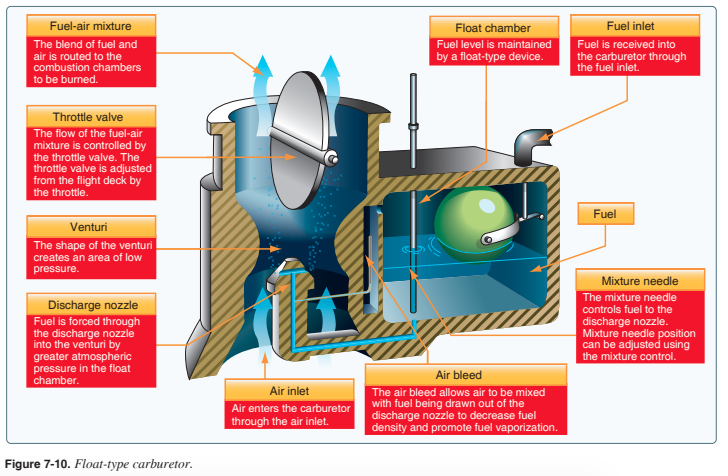
I’m sure you’ve all seen this diagram of the carburetor in the PHAK…the carburetor draws outside air into the venturi where it speeds up (drops pressure), sucks into the venturi and atomizes it before sending it to the engine for combustion. The pressure drop and atomization of fuel in the venturi can lead to temperature drops as high as 70° F. So carburetor ice can occur even on perfect 70° and sunny days if the moisture content in the air is high enough. With enough humidity, the moisture in the air being drawn through the carburetor can freeze and stick to the walls of the venturi.
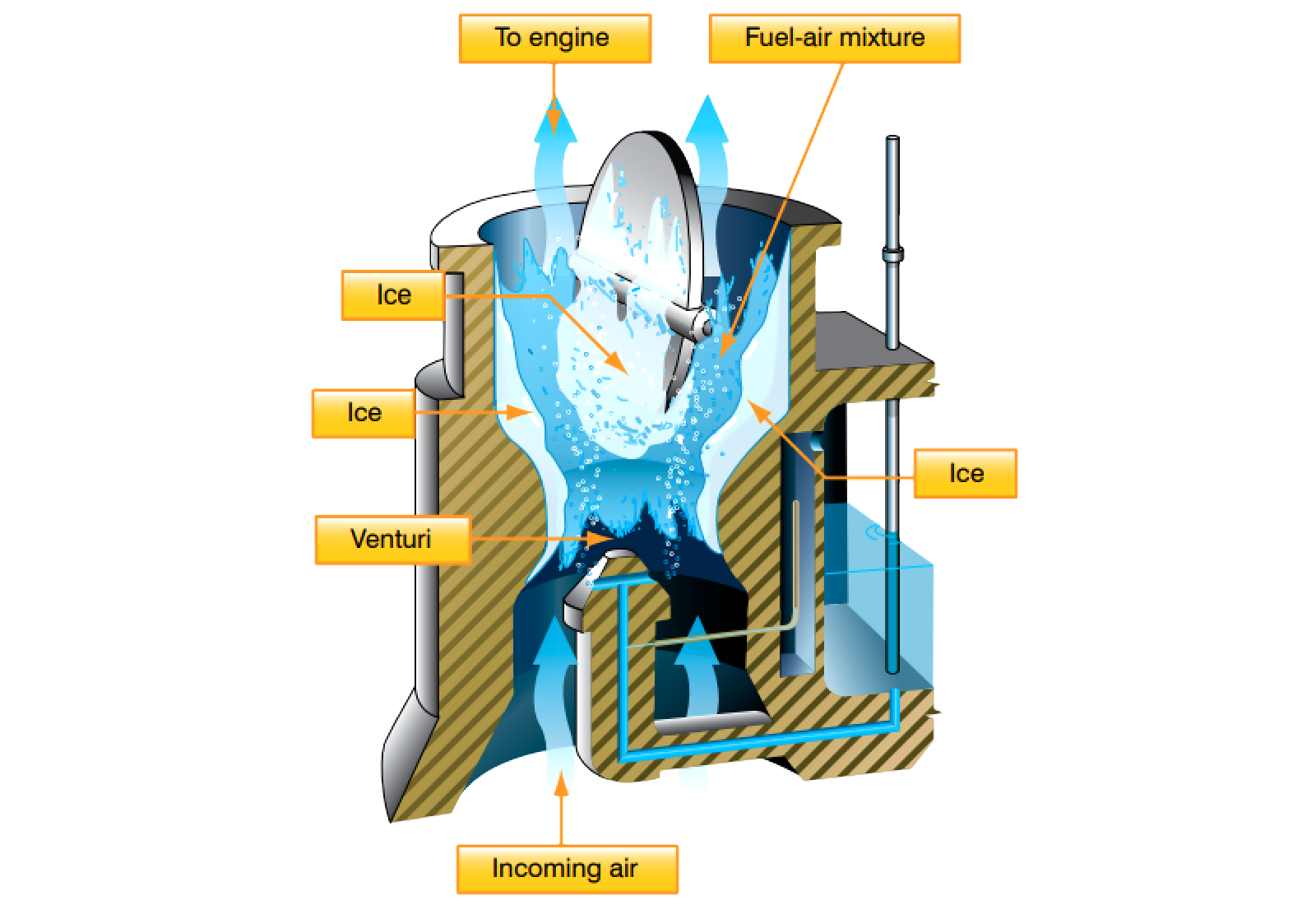
This ice can stick to the walls of the venturi, restricting airflow (and therefore fuel flow) to the engine. It can also constrict the butterfly valve, which we control with the throttle lever, and can restrict its operation. A small amount of icing (less than is shown in the above diagram) will usually be experienced as a small power loss and potentially a slightly rough running engine. More significant icing, akin to what’s shown in the diagram, can lead to more, potentially dangerous, power loss if not immediately addressed.
How do we get rid of Carb Ice?
What tools do we have in the cockpit to deal with carb ice? In carbureted GA trainers, we have carburetor heat.
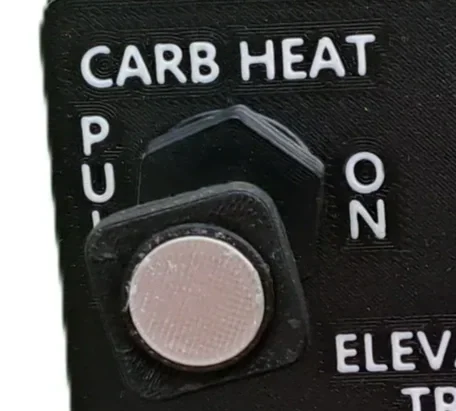
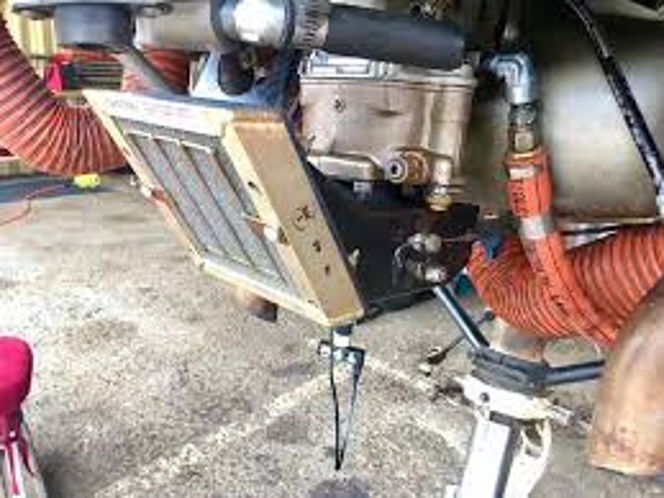
This little knob activates carb heat but closing a vent inside your plane’s airbox. This prevents air from coming in through the air filter on the nose of the plane, and draws air in from the heater shroud (heated by the exhaust), sending hot air to the carburetor instead of outside air.
The best use of carb heat is to prevent icing from occurring at all. Your instructor should be teaching you how and when to use carb heat during your training flights. For the most part, any time you’re going to reduce power below cruise settings during high humidity days and/or days below 75° F, you should use carb heat. This includes when you’re practicing all your maneuvers (like stall recoveries and slow flight), but should be a specific focus while flying the pattern to land. Your pre-landing checklist may be something like GUMPS (Gas, Undercarriage, Mixture, Props/Power, Switches/Seatbelts). The switches portion of that checklist includes activating carb heat if necessary, which will be especially important when you’re low to the ground and having full power available could save you from a nasty situation by performing a go-around.
In all situations, activating carb heat will lead to reduced power while activated since hot air is less dense, and therefore has less oxygen available for combustion. In the absence of ice, full power will return once carb heat is deactivated.
If you do pick up some carb ice, but you catch it early, carb heat can be activated (along with increasing power) to melt the small amounts of ice that have already formed. This will usually result in a further reduction in power due to the previously mentioned hot air, but also any water being melted into the engine (and engines don’t run on water). Power usually stabilizes and returns fairly quickly once all the ice has been removed.
In more severe icing cases, as carb heat melts larger chunks of ice (which are then sent to the engine) you may experience a rough running engine as larger volumes of water are taken into the engine and more significant power loss. More severe icing cases will usually also require the application of full throttle to assist in melting the ice. I’ve never experienced carb icing that got to this level, but friends have said it can take what feels like forever to clear the icing and get full power back (in reality, most of the time it probably takes a few seconds to return to normal. In more sever cases, it can take 30 seconds or more. It just depends on the severity and the conditions).
Conclusion
In SoCal, it’s easy to neglect carb heat, especially during summer when temperatures are rarely low enough to necessitate carb heat during the day and it’s rare to experience any kind of weather less than VFR. Thinking about the conditions during your preflight and getting proficient at running your pre-maneuver and pre-landing checklists can help increase your situational awareness and using the carb heat will become second nature. Early in training, I like to teach students to use the carb heat regardless of outside conditions to build the habit. Later in training, once the task saturation of learning to fly an airplane subsides, we can start being more situational about carb heat usage.
In a different post, I’ll discuss more specifics about the systems involved in flying the airplane, including the carburetor and carb heat so look out for that one! Please feel free to email me any questions you might have or any suggestions on a future topic!